Learning Outcomes:
i. Define animal husbandry and its key components.
ii. Describe the role of livestock in contributing to the national economy.
iii. Explain how different livestock products, like milk, meat, eggs, wool, and others, contribute to economic growth and development.
iv. Appreciate the diverse benefits and challenges associated with animal husbandry practices.
Introduction:
Imagine a bustling marketplace, filled with the sights and smells of fresh produce. But amidst the fruits and vegetables, lies another engine of economic activity: animal husbandry. This vital branch of agriculture, focused on raising and managing livestock, plays a crucial role in the economic fabric of many nations, including Pakistan. Today, we embark on a journey into the realm of animal husbandry, exploring its diverse contributions to our economy and the fascinating world it encompasses.
i. The Backbone of Agriculture: Understanding Animal Husbandry:
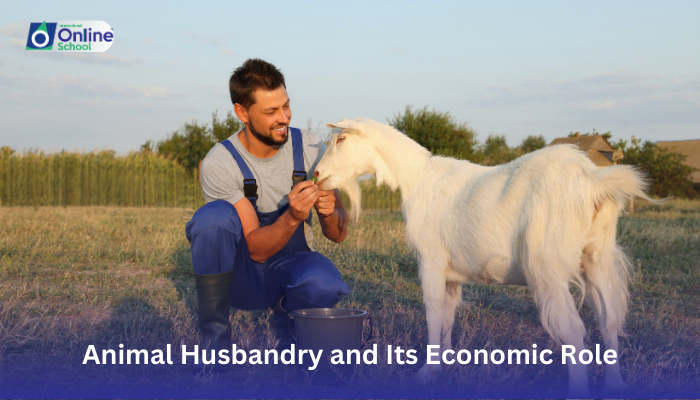
Animal husbandry is the science and practice of raising and managing domesticated animals for various purposes. This includes activities like breeding, feeding, sheltering, and caring for animals to obtain valuable products like milk, meat, eggs, fiber, and even manure. It encompasses a wide range of animals, from cows and sheep to chickens and goats, each playing a unique role in the economic landscape.
ii. A Wealth of Products: The Economic Contributions of Livestock:
Milk and dairy products: Milk provides essential nutrients like calcium and protein, while yogurt, cheese, and butter are popular and profitable derivatives. Dairy farming contributes significantly to rural income and employment.
Meat and poultry: From succulent steaks to flavorful chicken, meat is a staple in many diets and a valuable source of protein. Meat production creates jobs in processing and distribution, boosting the overall economy.
Eggs: A versatile source of protein and readily available, eggs are consumed by millions daily. Egg production generates income for farmers and contributes to food security, especially for vulnerable populations.
Fiber and wool: Sheep and other animals provide wool, used for clothing, carpets, and other textiles. This industry creates jobs in production, weaving, and garment manufacturing, boosting the economy.
Manure and fertilizers: Animal waste is a valuable resource in agriculture, used as fertilizer to improve soil quality and crop yields. This reduces dependence on synthetic fertilizers, promoting sustainable farming practices.
iii. A Multifaceted Impact: Benefits and Challenges:
Animal husbandry offers various benefits, including income generation, poverty alleviation, food security, and job creation. However, it also presents challenges like environmental concerns (animal waste and greenhouse gas emissions), animal welfare issues, and the need for sustainable practices. Addressing these challenges is crucial for ensuring the long-term success and positive impact of animal husbandry.
Animal husbandry is not just about raising animals; it's about weaving a complex tapestry of economic activity. From nourishing families to generating income, it plays a vital role in the national economy. By understanding its diverse contributions, appreciating its benefits and challenges, and promoting sustainable practices, we can ensure that animal husbandry continues to be a powerful force for economic growth and development, enriching not just our wallets, but our communities and our relationship with the natural world.
